
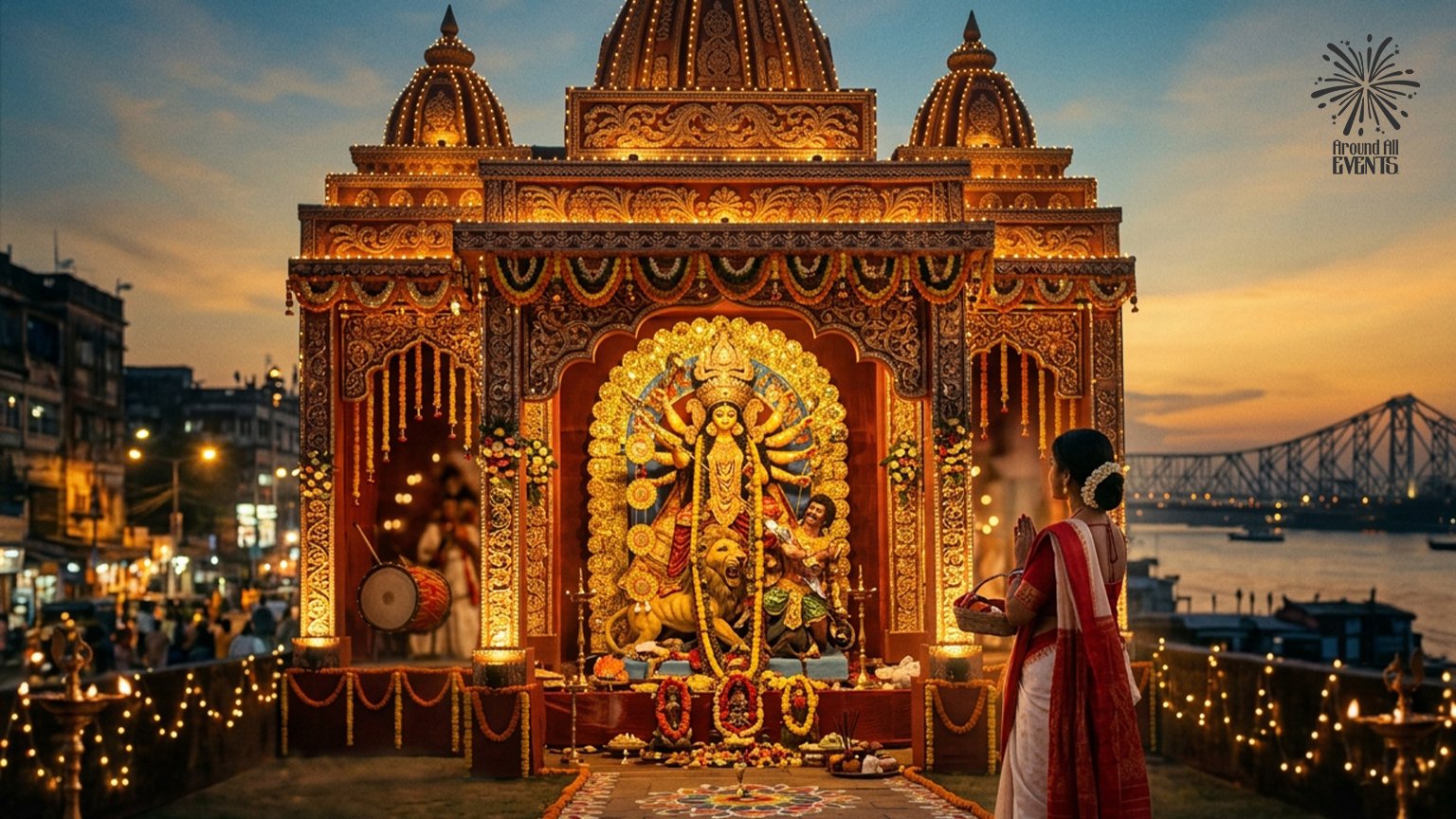
Durga Puja is a major Hindu festival celebrated in Hindu community, especially in Kolkata. Every autumn, Kolkata transforms into a breathtaking open-air art gallery during this time. The festival honors Goddess Durga’s victory over the demon Mahishasura, symbolizing the triumph of good over evil. The festival is basically the ten-day worship. The festival is so grand that it has been Inscribed in 2021 on the Representative List of the Intangible Cultural Heritage of Humanity.
Country & Regional Overview
Durga Puja (also known as Durgotsava) is mainly celebrated by Bengali Hindus. As a result, Bengali Hindus around the world celebrate the festival in their own way. However, since the largest population of this demographic resides in Kolkata, India, the “City of Joy” hosts its grandest celebrations.
India is a land of vast cultural diversity, and Bengal’s distinct identity shines brightest during autumn. Kolkata, the capital of West Bengal, serves as the cultural heart of the region. During the festival, the city welcomes millions of visitors worldwide, creating a vibrant atmosphere where traditional heritage seamlessly blends with modern creative artistry.
Event Details
Celebrated over ten vibrant days during the Bengali/ Hindu month of Ashwin (September–October), Durga Puja reaches its crescendo from Sasthi through Vijayadashami (6th to 10th day of Ashwin). The festival transforms urban landscapes into living galleries, where grand temporary architectural structures, known as pandals, house majestic idol sculptures of Goddess Durga and her children. Streets shine beneath round-the-clock illuminations, echoing with the thunderous, hypnotic rhythms of traditional dhak drums.
The spirit of the festival unfolds through the rituals, beginning with the nostalgic early-morning radio chants of Mahalaya. From Day 01 to Day 05 of the month, Artisans, lighting crews, and organizers complete structural work as well as a sacred vessel filled with water is placed in homes or pandals to welcome divine energy. The ritual awakening of Goddess Durga beneath a Bael (Bilva) tree, inviting her presence for the upcoming festival days also takes place.
On Maha Shasthi (Day 06 of the month), formal awakening of the Goddess performed at twilight under the Bael tree. Idols are formally unveiled to the public, marking the official start of pandal-hopping.
On the next day, which is Maha Shaptami, Nine plants tied to a banana trunk (representing nine forms of Durga) are immersed and bathed in a nearby river before dawn. Sacred chants and rituals infuse life into the main idol. Sixteen ceremonial items (flowers, incense, clothes, ornaments, and food) are also offered on this day to the deity.
Maha Ashtami (Day 08 of Ashwin) is considered to be the Peak worship day of the whole occasion. Devotees gather to offer fresh flower (Anjali) during the Sanskrit chants. Kumari Puja and Sandhi Puja are also performed on this day.
A sacred fire ritual with special wood, ghee, and mantras are performed to seek peace and blessings on Maha Navami (Day 09 of Devi Paksha). Elaborate offerings prepared for the Goddess are also distributed to the devotees on this day which is called “the bhog”. The bhog usually includes khichdi, labra (vegetable stew), chutney, and payesh. At the evening, devotional dance are performed mainly by women using clay incense burners (dhunuchi) filled with coconut husk, camphor, and resin to the beat of dhak drums.
On Vijaya Dashami (Day 10 of the month), symbolic farewell rituals are followed which is known as Darpan Bisarjan. On this day, Sindoor Khela is also celebrated where married women apply red vermilion (sindoor) to Goddess Durga’s forehead and sweets to her mouth, followed by applying sindoor to each other in celebration of married life. The Ten-day Puja ends with the solemn immersion rituals known as Bisarjan that gently bid the Goddess farewell.
The Biggest Durga Puja Events
While Kolkata hosts thousands of pandals, several legendary community pujas draw immense crowds due to their scale, elaborate themes, and historic heritage. Some of them are mentioned here with their specialty:
- Sree Bhumi Sporting Club is renowned for its grand, movie-set-style pandals that recreate iconic world architecture, featuring a Goddess Durga idol adorned in real gold and silver jewelry.
- Santosh Mitra Square in Central Kolkata draws massive crowds with its extravagant, high-budget concepts, incorporating dynamic illumination, light projections, and intricate metalwork structures.
- Suruchi Sangha focuses on cultural artistry and social themes, highlighting a different Indian state’s heritage each year through eco-friendly materials and authentic regional handicrafts.
- Ekdalia Evergreen Club preserves classical tradition by creating grand replicas of ancient Indian temples, illuminated by massive traditional chandeliers and featuring classic Echchala Durga idols.
- Baghbazar Sarbojanin Durgotsav offers over a century of heritage, celebrated for its authentic white-clay Sabeki idol, traditional rituals, vibrant fairgrounds, and iconic Sindoor Khela on Vijaya Dashami.
How to Go
There are countless pandals at Kolkata. So, it is better to roam around the city for the whole evening and enjoy the beauty of as many pandals as possible. I suggest you to create a day-wise route plan for yourself which includes our suggested pandals with other nearby ones and take rickshaw or taxi to visit them. We can give you the basic guide to move within the city which is probably going to be sufficient for you.
Most long-distance trains anywhere from India will arrive at either Howrah Junction (HWH) or Sealdah (SDAH) railway stations at Kolkata.
From Howrah Station:
If you arrive at Howrah Station, you can have convenient transit choices to enter into the city. You can take the Kolkata Metro Green Line underwater across the Hooghly River to Esplanade, enjoy a scenic government ferry ride from Howrah Ghat, or hire yellow taxis and ride-hailing services directly outside the platforms.
From Sealdah Station:
If you get to Sealdah Station, you can access the Green Line Metro to reach key central hubs like Phoolbagan and Salt Lake. Alternatively, buses and prepaid or meter taxis run continuously just outside the main exit gates for direct road transport.
How to Attend (Ticketing & Registration)
Durga Puja is entirely open to the public. You do not need a paid ticket or registration to visit community pandals. In fact, the environment is very welcoming. Tourism departments and local organizers may issue special “VIP Passes” that might let guests bypass general queue lines but overall anyone can get access to almost all the mandaps without any cost.
Sometimes, State tourism boards (WBTC) offer registered bus and river cruise packages covering major heritage and award-winning pandals which you can look for. That removes your headache to find the locations and the transportations all at once.
Attire & Dress Code
Durga Puja is a grand fashion showcase where traditional wear takes center stage:
- Women: Sarees (preferably Cotton, Jamdani, or classic red-and-white Garad silk). Some girls/ women who are not comfortable with Saree wears heavy Salwar Kameez as well.
- Men: Classic Kurta-Pyjama or Dhoti-Kurta, especially for morning prayers and evening outings.
- Footwear: As visiting the padals will require several kilometers of walking, people often wear extremely comfortable walking shoes or sandals.
Things to Buy at Puja
Durga Puja is basically a religious event. So, there is nothing really offered to buy. However, temporary night markets and fairs set up near major pandal clusters offer excellent local goods such as:
- Handloom Textiles: Authentic Tant, Jamdani, and Baluchari sarees.
- Handicrafts: Terracotta pottery, Bankura horses, Dokra metal art, and Solapith decorative items.
- Sweets & Savories: Rosogolla, Sandesh, hot Kachoris, and street foods like Kolkata Kathi rolls and Puchka.
Additional Tips for Visitors
- Pandal-Hop at Night: The city’s world-famous light installations come to life after sunset. So, visit the pandals at night to get the best out of the exhibitions.
- Stay Hydrated: Early autumn weather can be warm and humid; keep bottled water and electrolyte drinks handy.
- Use the Metro: Traffic jams can freeze entire roads at night. The Metro runs extended hours during Puja days and is the fastest way to travel between North and South Kolkata.
- Respect Local Customs: Remove your shoes when stepping onto designated temple platforms during prayer offerings. Wearing shoes in sacred spaces is disrespectful to religious customs and the local community.