

Pohela Boishakh is the first day of the Bengali calendar, generally falls on April 14 of the Gregorian calendar. It is a festival that is celebrated nationwide where the people of the country bids farewell to the old Bengali year and welcomes the new year. Traditionally Bangla year starts with the rise of the sun and following this trend, the day beings at the dawn with cultural programs at various places of the country where artists sing traditional Bangla songs, perform folk dance and recite poems. Amongst them, program at Ramna Batamul in Dhaka is the biggest one where people from all over the country gathers to celebrate the day.
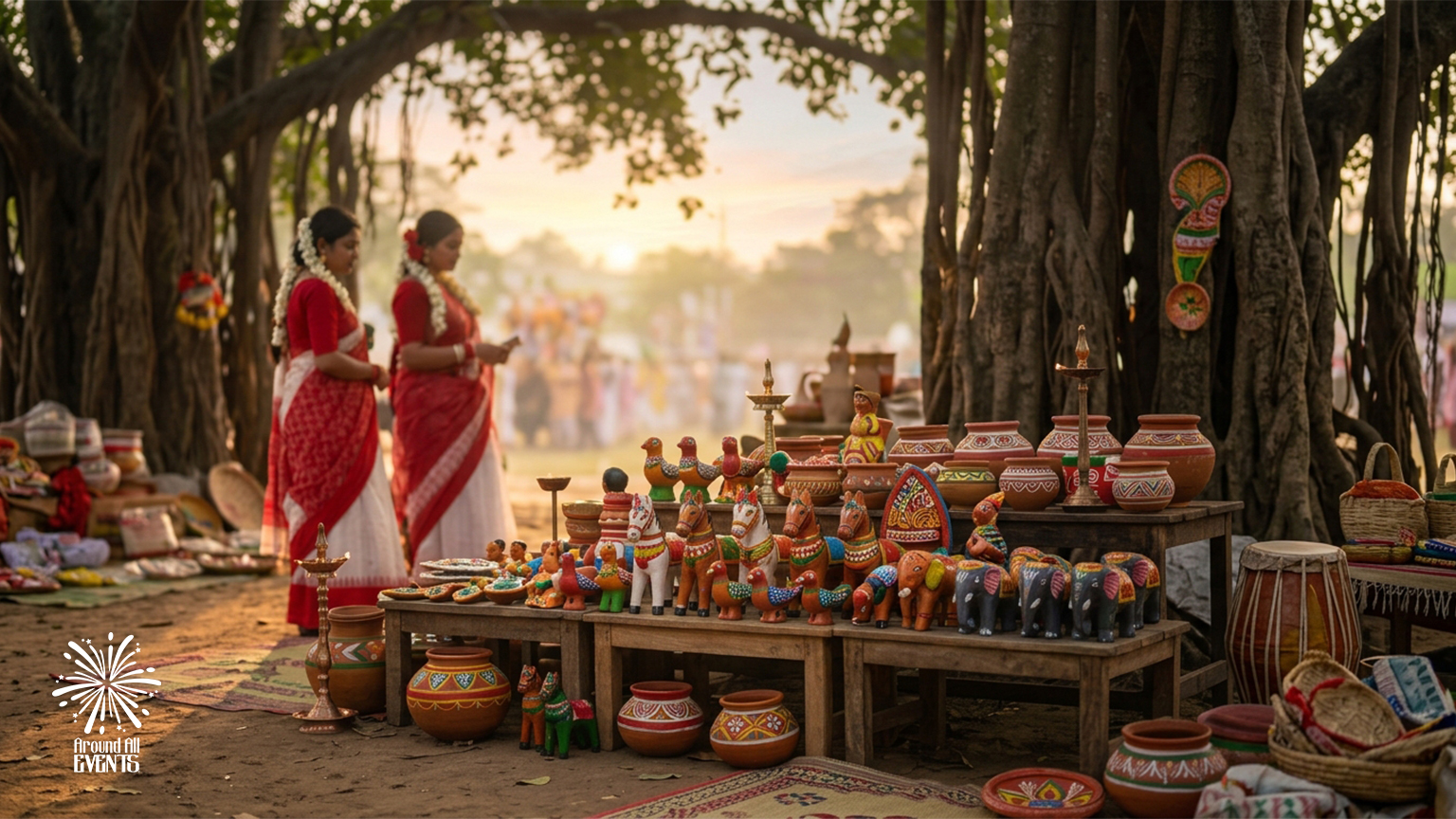
Fairs are organized at different places of the country known as “Boishakhi Mela”. At these fairs, you can experience traditional music, puppet show, bioscope show, traditional sweets, clay toys and many more.
Where is it celebrated?
Pohela Boishakh is celebrated broadly in Bengali speaking territories – mainly in Bangladesh and a few parts of India which includes West Bengal, Assam, Tripura, Jharkhand, and Odisha.
But the biggest Pohela Boishakh celebration takes place in Dhaka, Bangladesh. The programs include famous procession at Dhaka University known as Mangal Shobhajatra and iconic dawn celebration at Ramna Batamul.
The biggest procession named Mangal Shobhajatra is organized by the teachers and students of the Charuloka Institution (Faculty of Fine Arts) of the University of Dhaka. This rally is so famous and meaningful to Bangla culture that is has been recognized by UNESCO as an Intangible Cultural Heritage of Humanity in 2016.
The Sunrise cultural event at Ramna Batamul is also as classic as the Mongol Shobhajatra. The celebration typically starts at the dawn of the Pohela Boishakh (1st day of the Bangla year) where collective chorus singing is performed. The famous Rabindra Sangeet “Esho He Boishakh, Esho Esho” typically opens the program and it extends until 8:30 am. The program concludes with the National Anthem of Bangladesh.
If you want to experience the biggest celebration of this Bangla new year, you have to attend these two events without any failure.
However, the Boishakhi Mela and the procession has become common in many districts of Bangladesh and India. So, you can get a little taste of the event even if you cannot come to the capital of Bangladesh.
How to Reach the destination?
The biggest two events described above are celebrated at two places which are luckily located at 15 minutes walking distance from one another. So, if you reach one destination, you can easily attend the other one. Your entry point at Dhaka will be Hazrat Shahjalal International Airport (DAC
You can hire a taxi, CNG run auto manually or use ride-sharing app like Uber for hiring car and motorbike to go to Shahbag (the destination of the events). From the airport, it will take around 1 to 2 hours to reach there though the distance from airport to Shahbag is 15 to 17 kilometers. Dhaka city is infamous for its intense traffic jam. However, you can save some time if you take the metro. You have to start at Uttara North station and get off at Shahbag station.
How to Attend?
The Bangla culture welcomes everyone to participate in the new year celebration and because of this, the events are accessible to everyone. There is no entry fee or reservation required to attend the events. You just have to show up on the premise at the right time with love for Bangla culture! The cultural program starts at dawn and ends within 8:30 am and the rally “Mongol Shobhajatra” starts at around 9:00 am. So you can attend both events without overlapping one.
Attire and Dress Code
As it is an event of a whole culture, it has strong customs for attire and dress code. The traditional Bangla cloths are worn by almost everyone attending the events.
The outfit for women is a traditional Bengali cotton Saree within the color scheme of white and red. However, don’t be amazed if anyone is wearing a different color saree or a salwar suit in red and white. Women often wear significant makeup, adorn their hair with fragrant floral garlands and wear colorful bangles on their wrists.
Men traditionally wear a Panjabi paired with comfortable pajamas or jeans. The Panjabi is a long lose tunic usually white, red or any other bright color featuring red.
Things to Buy
All the items needed to get into traditional Bangla attire become available in local markets from March with a wide range of choices. So, you will have enough time to shop dress, accessories, bags and shoes for the Pohela Boishakh.
On the day of Pohela Boishakh, traditional fair “Boishakhi Mela” is arranged in almost every district of the country. In this ‘Mela’ you can find classic clay toys, clay pots, painted clay objects, clay bank, traditional handloom textiles and Nakshi Katha, local pithas (rice cake), batasha and nokul daana (sugar candies) etc.
Additional Tips
- Beware of the Heat: Mid-April in Bangladesh is generally the hottest and most humid period of the year. So, roaming around in the crowded places in such hot and humid condition can negatively impact your health. So, wear lose dress (as the traditional attire demands), keep yourself hydrated by drinking plenty of fluids, apply sunscreens to minimize the impact of excessive heat.
- Arrive at the destination early: As the program is open for all, it generally becomes very crowdy. So, try to arrive at the destination early to secure a better spot to enjoy the program.
- Look after your belongings: The crowd at Shahbag area during the program is huge and you have to be aware about your belongings such as your wallet, mobile or any other valuable items that you carry to the event or else these can be dropped, lost or stolen. So, stay alert.
Pohela Boishakh is notably the biggest celebration of Bangla culture. On this day, the whole nation embraces the cultural attire, cultural music, traditional toys and traditional cuisine. All over the year, people live in the global mindset but Pohela Boishakh is the only day when the people of Bengal comes close to their roots and enjoys being Bengali. You are always welcome to experience how it feels to be a Bengali.